SGPGIMS Unveils Roadmap to Become a Quaternary Healthcare Centre
Monday, 15 December 2025, 14:14 IST

- SGPGIMS plans to upgrade from tertiary to quaternary care to treat the most complex medical cases.
- The focus will be on advanced technology, AI, and research to improve accuracy, speed, and quality of care.
- A wider telemedicine network will expand access to specialty services across medical colleges in Uttar Pradesh.
The Sanjay Gandhi Post Graduate Institute of Medical Sciences (SGPGIMS) has unveiled a forward-looking roadmap to transform itself into a quaternary healthcare center, marking a major shift in its role as a leading medical institution in Uttar Pradesh. The announcement was made during the institute’s 42nd foundation day in Lucknow.
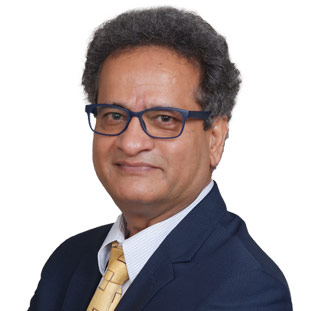
Addressing the gathering, Director Prof. Radha Krishan Dhiman said SGPGIMS has reached a stage where it must move beyond tertiary care. He explained that a quaternary care center brings together advanced medical technology, skilled human resources, and high-impact research to treat the most complex and critical cases.
Prof. Dhiman noted that SGPGIMS already has the foundation to become a final referral center for severely ill patients. He highlighted the institute’s growing capabilities in areas such as proton therapy, ECMO, advanced neuro-interventions, precision oncology, and next-generation cellular therapies. This transition, he said, would place SGPGIMS alongside some of the top healthcare institutions in India and globally, supported by its improving performance in rankings like NIRF and NAAC.
A key part of the roadmap involves the use of artificial intelligence in healthcare. Prof. Dhiman emphasized that AI can help make medical services safer, faster, more accurate, and scalable. With strong support from both the central and state governments toward the goals of Viksit Bharat and Viksit Uttar Pradesh by 2047, SGPGIMS aims to ensure healthcare keeps pace with rapid technological progress.
Also Read: UNSW Sydney to Expand Global Footprint with Bengaluru Campus in 2026
The third pillar of the vision focuses on the Uttar Pradesh Medical College Network (UPMCN). This initiative seeks to connect medical colleges across the state through a hub-and-spoke telemedicine model, enabling tele-consultations, tele-education, tele-ICU services, and shared data systems. Currently linked with six medical colleges, the network can be expanded to 20 institutions, significantly improving access to specialized care.
Amit Kumar Ghosh, Additional Chief Secretary for Health and Medical Education, assured full government support, including budgetary assistance, to help SGPGIMS achieve these goals.