IIT Guwahati Hosts First CARE Conference to Shape India's Responsible AI Roadmap
Friday, 12 December 2025, 10:37 IST

- IIT Guwahati holds first CARE Conference on Data Science and AI
- Insights to support India’s upcoming national AI Vision Document
- Event brings global universities, Indian institutes, industry, and policymakers together
IIT Guwahati hosted its first Collaborative for Academic Research Excellence (CARE) Conference on Data Science and AI, bringing together leading global universities, top Indian institutes, industry leaders, and policymakers to help shape India’s responsible AI future. The three-day conference, held from December 8-10, explored the latest advances in generative AI, explainable systems, healthcare technologies, robotics, quantum algorithms, cryptanalysis, and high-performance computing.
Insights from the discussions will contribute directly to India’s upcoming AI Vision Document, which aims to build an inclusive, transparent, and future-ready AI framework. The event also marked the beginning of an annual effort to strengthen long-term research partnerships across academia and industry.
Organized by the Mehta Family School of Data Science and Artificial Intelligence at IIT Guwahati and supported by the Bhupat and Jyoti Mehta Family Foundation, the conference hosted faculty and researchers from institutions including MIT, Purdue University, UC San Diego, Penn State, UT Dallas, and several IITs, IISERs, and NITs.
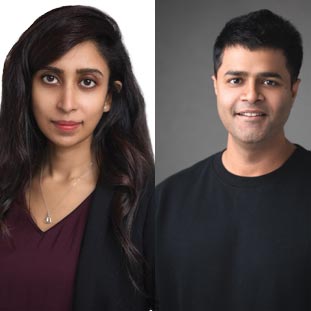
Rahul Mehta, Founder of the Mehta Family Foundation, said the gathering highlighted the strength and ambition of India’s AI research ecosystem, which is rapidly aligning with global expertise to build national leadership in AI. Conference Convener Prof. Ratnajit Bhattacharjee noted that the sessions showcased India’s growing capabilities in foundational algorithms, generative architectures, and AI for social impact.
Also Read: IIT Bombay Sets Up New Company to Lead India's AI Push
The program featured technical talks, panels, industry sessions, and poster presentations covering themes such as hallucination-resistant models, transparency in AI, healthcare diagnostics, biomedical modeling, robotics, quantum computing, seismic modeling, cybersecurity, and cryptanalysis. Experts from DRDO and academia also discussed new mathematical tools improving cryptographic resilience and modeling of complex systems.